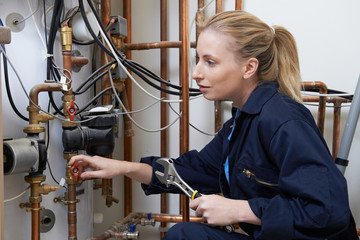
What to Do in the First 5 Minutes of a Burst Pipe Emergency
A burst pipe in your Hermon home is a high-stress situation that demands immediate action. Hundreds of gallons of water can gush into your living space, basement, or crawl space within minutes, leading to structural rot, ruined drywall, destroyed flooring, and electrical hazards. Knowing exactly what to do—and what not to do—in the initial five minutes can make the difference between a simple pipe repair and thousands of dollars in water damage restoration.
Step 1: Shut Off the Main Water Supply Immediately
Your top priority is cutting off the water pressure feeding the break.
-
Where to look: In most Hermon and Penobscot County homes, the main shutoff valve is located in the basement, cellar, or crawl space on the street-facing side of the house, right where the main water service line passes through the concrete foundation or floor.
-
Valve type:
-
Gate Valve: A round wheel valve. Turn it clockwise (righty-tighty) until it stops completely.
-
Ball Valve: A single lever handle. Turn the handle 90 degrees so it is perpendicular (crossing) the pipe.
-
-
Well Systems: If your home relies on a private well rather than municipal water, locate your pressure tank (usually in the basement) and switch off the dedicated circuit breaker labeled "Well Pump" at your main electrical panel.
Step 2: Relieve Remaining Water Pressure
Even after turning off the main valve, gallons of pressurized water remain trapped inside your home's piping network.
-
Go to the lowest level of your home (or the lowest working faucet).
-
Turn on both the cold and hot water taps.
-
Flush your toilets once or twice.
-
This drains remaining residual water into your drainage system rather than allowing it to dump out of the damaged, broken pipe.
Step 3: Turn Off Power if Water Is Near Electrical Systems
Water and electricity are a deadly combination. If water from the burst pipe is leaking near electrical outlets, light fixtures, appliance connections, or your electrical breaker panel:
-
Do NOT step into standing water to reach the electrical panel.
-
If you can safely access your breaker box without crossing wet zones, shut off power to the affected rooms or cut the main breaker.
-
If water is already dripping through a ceiling light fixture or near your panel, stay clear and request emergency service right away.
Step 4: Contain and Drain the Water
While waiting for professional assistance, focus on limiting property damage.
-
Place buckets, plastic bins, or storage containers under active drips.
-
Lay down heavy towels or blankets to mop up pooling water on hardwood or subflooring.
-
If a ceiling is sagging or bulging with trapped water, carefully poke a small hole in the middle of the bulge with a screwdriver or pencil while holding a bucket beneath it. This prevents the entire drywall sheet from collapsing under weight.
What NOT to Do During a Burst Pipe Crisis
When water is actively leaking, panic can lead to quick decisions that actually worsen the damage or put your safety at risk. Avoid these critical mistakes:
-
Do NOT use open flames or high-heat blowtorches to thaw frozen pipes: If your pipe froze before bursting, using a blowtorch or propane heater to thaw out ice creates an extreme fire hazard and can cause trapped water to boil and explode the pipe further.
-
Do NOT ignore small hairline splits or pinhole leaks: A pipe that is currently dripping slowly can suddenly burst wide open under normal municipal water pressure (often 50–80 PSI).
-
Do NOT step into standing water with exposed wiring nearby: Always prioritize personal safety over property protection.
-
Do NOT use standard household vacuum cleaners on standing water: Household vacuums are not waterproof and present an immediate electrocution risk. Only use a commercial wet/dry shop vac connected to a GFCI outlet.
-
Do NOT leave damp drywall or insulation sealed up: Trapped moisture behind plaster or drywall in humid seasons or heated winter homes creates ideal conditions for toxic mold growth within 24 to 48 hours.
Why Pipes Burst in Hermon, ME
Understanding why pipes fail helps you identify vulnerable areas in your home before temperatures plunge or water pressure spikes. In Central Maine, several distinct regional and structural factors contribute to pipe ruptures.
Deep Winter Freezing Temperatures
Hermon experiences severe winter weather with sub-zero temperatures lasting for days or weeks. When water inside a pipe freezes, it expands by approximately 9%. However, it is not the physical ice expansion alone at the frozen point that usually splits the metal or plastic; it is the immense hydraulic water pressure trapped between the ice block and a closed faucet or valve downstream. When that pressure exceeds the pipe wall's pressure rating, the pipe ruptures.
Vulnerable Micro-Locations in Maine Homes
Pipes located in unheated or under-insulated zones are primary targets for winter burst events:
-
Cellars and Fieldstone Basements: Older homes around Hermon with uninsulated stone or rubble foundations often permit freezing drafts.
-
Crawl Spaces and Mobile Homes: Manufactured homes or elevated structures without full skirt insulation expose water supply lines directly to Maine's severe frost line.
-
Exterior Wall Cavities: Water lines installed along uninsulated exterior walls or in cold attics over garages are highly susceptible during prolonged cold snaps.
-
Vents and Drafts: Small gaps around exterior dryer vents, hose bibbs, or rim joists can let a jet of sub-zero air blow directly onto an unshielded pipe segment.
Pipe Corrosion and Material Fatigue
Not all pipe bursts happen in winter. Older copper, galvanized iron, or lead pipes degrade over time:
-
Corrosion & Pitting: Hard water minerals or high acidity can slowly eat through copper walls, causing sudden pinhole ruptures.
-
Polybutylene Piping: Installed in many homes built between the late 1970s and mid-1990s, this gray plastic material deteriorates when exposed to common water treatment chemicals, leading to brittle, sudden fractures.
High Water Pressure & Water Hammer
Excessive municipal water pressure or frequent pressure surges (known as water hammer) put continuous stress on joints, elbows, and solder points. Over time, these connection points fail suddenly under strain.
Symptoms That Indicate an Unseen Burst Pipe
A burst pipe isn't always a dramatic, gushing waterfall in your kitchen. Often, a pipe splits inside a wall cavity, under a concrete slab, or beneath a floor structure. Watch for these subtle warning signs:
| Warning Sign | Potential Hidden Location | Immediate Impact |
| Sudden Drop in Water Pressure | Main service line or primary supply trunk line | Faucets trickle throughout the house |
| Unexplained Hissing or Running Water Sounds | Behind drywall, under floorboards, or in crawl space | Water actively leaking while all fixtures are off |
| Spongy, Discolored, or Warped Flooring | Subfloor supply line or radiant heating loop | Rotting subfloors, ruined hardwood or laminate |
| Damp Spots or Bubbling Paint on Ceilings/Walls | Second-story bathroom lines or overhead supply branches | Drywall collapse, structural wood framing damage |
| Unexplained Jump in Water Utility Bills | Underground main line between meter and foundation | Continuous water loss running into surrounding soil |
| Musty Odors or Mold Along Baseboards | Crawl space or unheated basement wall cavity | Poor indoor air quality, rapid spore growth |
Safe Homeowner Inspections vs. Tasks Requiring a Licensed Plumber
It is critical to distinguish between safe preliminary actions you can take as a property owner and complex repairs that require specialized equipment and professional licensing.
What You Can Safely Check
-
Inspect exposed basement or under-sink water pipes for visible drips, ice buildup, or green/white mineral crusting.
-
Check whether your main shutoff valve turns freely and shuts off water completely.
-
Feel surrounding drywall or trim for cold, wet spots or soft areas.
-
Read your municipal water meter (if accessible). If all faucets are off and the meter dial is actively spinning, water is flowing somewhere in your system.
What Requires a Professional Plumber
-
Solder repair on copper water supply pipes (requires open flame torches, heat shields, and strict fire safety precautions).
-
Cutting and fitting large main supply lines, PEX transitions, or press-fit systems under pressure.
-
Locating concealed leaks behind finished walls, under concrete slabs, or underground using electronic acoustic testing equipment.
-
Thawing deeply frozen underground lines or main service pipes safely without melting surrounding fittings or bursting adjacent sections.
-
Replacing main shutoff valves or street-side connections that require municipal utility coordination or main line isolation.
What to Expect During Professional Emergency Repair
When a licensed technician arrives at your property during a burst pipe crisis, they follow a systematic process to isolate, diagnose, and fix the issue safely.
+--------------------------+
|  1. Immediate Isolation  | --> Verifies main shutoff & eliminates immediate risk
+--------------------------+
            |
            v
+--------------------------+
|  2. Precision Detection  | --> Uses thermal imaging/acoustic tools for concealed leaks
+--------------------------+
            |
            v
+--------------------------+
|  3. Controlled Access    | --> Cuts minimal drywall/flooring to expose damage
+--------------------------+
            |
            v
+--------------------------+
|  4. Sectional Replacement| --> Removes failed pipe; splices high-grade PEX or copper
+--------------------------+
            |
            v
+--------------------------+
|  5. Pressure Testing     | --> Re-pressurizes system to verify 100% leak-free integrity
+--------------------------+
1. Immediate Safety & Isolation Check
The plumber's first step is verifying that water is fully isolated and checking for electrical or structural hazards in the working area.
2. Leak Location & Assessment
If the break point is hidden behind drywall or plaster, plumbers use non-invasive diagnostic tools:
-
Thermal Imaging Cameras: Identify cold thermal anomalies where escaping water cools surrounding building materials.
-
Acoustic Leak Detectors: Amplify the sound of pressurized water escaping tiny cracks inside walls or under slabs.
3. Exposing and Removing Damaged Piping
The plumber makes targeted cuts into drywall or flooring to expose the damaged section, preserving as much finished surface as possible. The split or corroded pipe section is cut cleanly out using specialized pipe cutters.
4. Splicing and Material Repair
Depending on your home's existing plumbing system:
-
For Copper Lines: The technician cleans and deburrs the metal, applying new copper couplings using professional torch soldering (sweating) or hydraulic press-fit fittings (ProPress).
-
For PEX Lines: The damaged section is cut out and replaced with flexible, freeze-resistant PEX pipe secured with stainless steel crimp rings.
-
For Galvanized/CPVC Lines: Transition fittings adapt old piping to durable, code-compliant modern materials.
5. System Re-Pressurization & Testing
Once the repair is secure, the plumber slowly reintroduces water to the house, bleeding air out of the lines. They perform a static pressure test to verify that the repair holds under full pressure and that no secondary leaks exist down the line.
Factors That Influence Emergency Repair Costs
Plumbing repair costs for a burst pipe vary based on the specific circumstances of the emergency. Rather than fixed flat figures, the total investment is determined by several practical factors:
-
Accessibility: A burst pipe under a bathroom sink is far simpler and quicker to repair than a burst line running behind a tile shower wall, inside a tight crawl space, or beneath a basement concrete slab.
-
Extent of Structural Access Required: The time and labor needed to safely access hidden pipes impact overall project labor.
-
Material Type and Diameter: Commercial-grade copper, specialized fittings, and main supply line materials carry varying material costs compared to standard branch lines.
-
Emergency Service Timing: Service calls requested after regular business hours, during weekends, or during extreme holiday winter storms typically include emergency dispatch rates.
-
Secondary Water Damage: While plumbing scope covers fixing the pipe itself, water mitigation, carpet drying, and drywall reconstruction are separate restoration services often covered under homeowner's insurance policies.
Insurance Tip: Most standard homeowners insurance policies cover sudden and accidental water damage caused by a burst pipe, as well as the cost to tear out and replace drywall to access the broken line. Take clear photos and videos of the damage, the broken pipe section, and all affected belongings before repairs begin to support your claim.
12 Common Mistakes Homeowners Make During Pipe Emergencies
-
Not knowing where the main shutoff valve is located before an emergency happens.
-
Delaying shutting off the water while trying to clean up flooding first.
-
Leaving garden hoses attached to outdoor spigots in winter, which traps water inside the sillcock valve and bursts the pipe inside the rim joist.
-
Setting thermostats too low (below 55°F) or turning heat off completely when traveling during Maine winters.
-
Using high-heat open flames or blowtorches inside unvented wall spaces to thaw frozen pipes.
-
Ignoring minor damp spots or hairline cracks on exposed basement pipes until they burst completely.
-
Attempting unsafe DIY soldering near wood framing or combustible insulation without heat shields.
-
Cracking main valves wide open instantly after a repair, causing high-pressure water hammer that damages other fittings.
-
Closing cabinet doors beneath sinks on exterior walls during extreme sub-zero weather, preventing warm room air from reaching pipes.
-
Failing to turn off power when standing in water or near dripping fixtures.
-
Using harsh chemical drain cleaners to clear frozen or backed-up lines, which can react violently or accelerate pipe corrosion.
-
Forgetting to inform insurance adjusters or throw away ruined building materials before taking clear photographic evidence.
Preventative Measures to Stop Future Pipe Bursts in Central Maine
Taking proactive steps during autumn or ahead of severe cold fronts significantly lowers the risk of frozen and burst pipes in Hermon properties.
+-----------------------------------------------------------------------------------+
|                        SEASONAL PIPE PROTECTION CHECKLIST                         |
+-----------------------------------------------------------------------------------+
| [ ] Disconnect and drain all outdoor garden hoses before the first frost.          |
| [ ] Install frost-free sillcocks or shut off interior outdoor line valves.        |
| [ ] Wrap exposed basement, attic, and crawl space pipes with foam insulation.     |
| [ ] Seal exterior wall gaps, vent perimeters, and rim joists with expanding foam. |
| [ ] Keep indoor heat set to at least 55°F (13°C) even when away from home.        |
| [ ] Open cabinet doors under kitchen/bathroom sinks during sub-zero cold snaps.    |
| [ ] Let vulnerable faucets trickle slightly during severe negative temperature nights.|
| [ ] Test your main water shutoff valve annually to ensure it turns smoothly.      |
+-----------------------------------------------------------------------------------+
Frequently Asked Questions
How long do I have before a leaking pipe causes permanent damage?
Water begins soaking into drywall, subfloors, and wood framing instantly. Structural weakening can occur within hours, and mold spores begin colonizing damp organic materials within 24 to 48 hours. Shutting off the main water valve immediately is critical.
Will a small crack in a pipe freeze and burst completely?
Yes. Ice forming inside a cracked or split pipe exerts continuous pressure. As temperatures fluctuate, the ice expands and shrinks, widening the crack until the pipe ruptures completely under normal line pressure.
Can PEX tubing burst if it freezes?
PEX (cross-linked polyethylene) is flexible and far more freeze-resistant than rigid copper or PVC because it can expand slightly under pressure. However, under extreme cold or repeated freezing cycles, PEX fittings, connection rings, and the pipe itself can still rupture.
How do I know if a pipe inside my wall is frozen before it bursts?
Key warning signs include a total lack of water (or a tiny trickle) coming from a faucet when turned on, frost visible on exposed pipe segments, or unusual bulging along visible pipe runs.
Should I leave faucets dripping during cold Maine nights?
Yes. Allowing a faucet served by exposed or vulnerable piping to trickle at a slow, steady rate keeps water moving and relieves hydraulic pressure built up between any potential ice blockages and the faucet valve.
What temperature causes pipes to freeze?
Uninsulated pipes exposed to temperatures of 20°F (-6°C) or lower for several consecutive hours are at high risk of freezing, particularly if wind drafts enter through gaps in foundations or siding.