Why Shower Water Pressure Suddenly Drops & How to Fix It
Discover why your shower water pressure suddenly dropped. Learn how to diagnose fixture, valve, and supply-line causes in your home plumbing system.
Diagnosing a Sudden Shower Pressure Drop
Stepping into a shower only to be met by a weak, disappointing trickle is a frustrating experience. When shower water pressure drops suddenly—rather than declining gradually over years—it usually points to a specific mechanical failure, a localized blockage, or a sudden shift in your home's water supply dynamics. Understanding why this happens helps you determine whether you are dealing with a simple maintenance task or a more complex plumbing issue requiring professional intervention.
Unlike whole-home pressure losses that affect every sink and appliance, a sudden drop confined to a single bathroom or just the shower itself provides valuable diagnostic clues. By examining how the water behaves, you can often narrow down the root cause before opening a toolbox or calling a local Oak Creek plumber.
The Critical Distinction: One Fixture vs. Whole-House Pressure
The first and most important diagnostic step is testing other water sources around your property. Turn on the bathroom sink right next to the shower, check the kitchen faucet, and flush the toilet. What you find completely changes the direction of troubleshooting:
- If only the shower is affected: The issue is isolated to the showerhead, the mixing valve, or the specific supply pipes leading directly to that fixture.
- If multiple bathrooms or fixtures show low pressure: The problem originates further upstream, involving a main shut-off valve, a failing pressure reducing valve (PRV), a water heater restriction, or a supply-side issue.
- If hot water loses pressure while cold remains strong: The restriction is typically located at the water heater inlet or outlet, or inside a thermal balancing spool within the shower valve itself.
Common Causes of a Sudden Shower Pressure Drop
When pressure vanishes overnight or during a single use, several common culprits are usually at play. Knowing the mechanics behind each failure helps clarify what is happening inside your walls and fixtures.
1. Mineral Scale and Debris Blockage at the Showerhead
Hard water is common across many regions, leaving behind mineral deposits made of calcium and magnesium. While mineral buildup usually accumulates slowly over months or years, a sudden surge of water can dislodge a large chunk of scale from deeper inside the pipe. That loose debris travels right to the back of the showerhead, lodging against the internal tiny rubber nozzles or flow restrictor disc. This creates an immediate, severe bottleneck that mimics a major pressure failure, even though the plumbing behind the wall is operating perfectly.
2. Shower Cartridge or Anti-Scald Valve Failure
Modern single-handle shower faucets rely on an internal pressure-balancing cartridge. This valve regulates the mix of hot and cold water to prevent sudden temperature spikes if someone flushes a toilet elsewhere in the home. Over time, internal O-rings, springs, or plastic spools can break, shift, or jam. If a piece of internal debris gets wedged inside the cartridge or a spool seizes mid-position, it can permanently restrict water flow to the shower outlet. In multi-family properties or older homes throughout southeastern Wisconsin, fluctuating water temperatures and mineral deposits accelerate this internal wear.
3. Partially Closed Supply Valves or Main Shut-Offs
Sometimes the simplest explanation is the right one. If plumbing work was recently performed, or if vibration from heavy household water use caused a valve handle to back off its seat, a supply valve may be partially closed. While sinks often have dedicated miniature shut-off valves under the vanity, showers usually rely on service stops hidden behind an access panel or behind the escutcheon plate of the mixing valve. If one of these service stops slips out of alignment, pressure drops instantly.
4. Water Heater Supply Restrictions or Dip Tube Failures
If your shower pressure drop only occurs when the handle is turned toward the hot position, look toward your water heater. Inside a storage-tank water heater, a plastic dip tube delivers incoming cold water to the bottom of the tank to be heated. If this dip tube cracks or disintegrates, fragments of plastic can break free and travel through the hot water lines, clogging plumbing fixtures from the inside out. Additionally, heavy sediment buildup at the bottom of the tank can partially restrict the outlet nipple, starving hot water lines during high-demand periods.
Safe Homeowner Inspection Steps
Before calling for professional service, you can safely perform several checks to diagnose the problem:
- Test other fixtures: Confirm whether the pressure loss is isolated to the shower or affecting the entire bathroom.
- Check hot versus cold: Turn the shower handle fully to the cold side, then fully to the hot side. Notice if the pressure changes drastically depending on temperature.
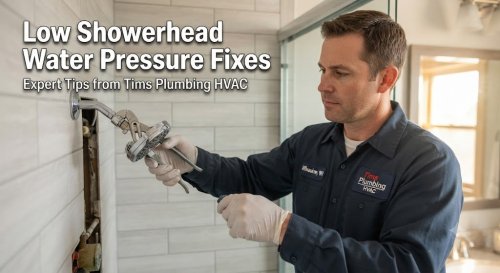
- Inspect the showerhead: Unscrew the showerhead from the shower arm. Look inside the threaded inlet for trapped mineral flakes or sediment. Soak the showerhead in a vinegar solution to dissolve hidden buildup, then flush the line briefly before reattaching.
- Verify service stops: If your shower installation includes accessible service stops behind the wall or in a utility closet, ensure both hot and cold valves are turned completely parallel to the pipes (open position).
Safety Warning: Never force stuck plumbing valves, and avoid attempting to disassemble soldered copper pipes, pressurized supply lines, or complex thermostatic mixing valves unless you have appropriate plumbing experience. Forcing old components can crack brittle pipes or fittings, turning a minor pressure drop into a flooding emergency.
When Professional Diagnosis Becomes Necessary
If cleaning the showerhead and checking accessible valves does not restore normal pressure, the problem likely lies within the sealed shower cartridge, behind the wall, or within the main water supply system. A professional plumber has specialized pressure gauges to test static and dynamic water pressure, helping determine if the issue is a failing pressure-reducing valve, localized pipe corrosion, or an obstructed mixing valve. In rental properties, condominiums, and commercial buildings, shared infrastructure and building-wide pressure regulations require coordinated maintenance rather than individual DIY fixes.
Factors That Influence Repair Costs
When a professional repair is required, costs vary depending on the exact nature of the failure. Understanding what drives these costs helps you evaluate estimates intelligently:
- Nature of the component: Replacing a standard shower cartridge is straightforward, whereas replacing an obsolete, proprietary mixing valve brand may require specialized puller tools or custom wall modifications.
- Wall accessibility: Showers backed by a bedroom closet or utility room are far easier to access than those surrounded by tile, stone, or exterior brick walls. Access panels save significant labor and wall-restoration costs.
- Upstream supply issues: If the pressure drop stems from a failing pressure-reducing valve (PRV) or sediment-clogged water heater lines, the repair scope expands beyond a single bathroom fixture.
- Urgency and timing: Emergency diagnostic calls outside normal business hours generally carry higher service rates than scheduled appointments.
Before approving substantial plumbing work, always ask the technician to clearly identify whether the failure is isolated to the fixture or part of a broader system issue, and request a detailed breakdown of labor, replacement parts, and warranty coverage.
Frequently Asked Questions
Can a clogged water heater filter cause low shower pressure?
Most standard tank water heaters do not have inlet filters, but tankless water heaters feature fine mesh inlet screens that frequently trap sediment and mineral scale. When these screens clog, hot water pressure drops across every fixture in the home. If your shower loses pressure only on the hot setting, inspecting the tankless inlet screen is a vital diagnostic step.
Why does my shower pressure drop only when someone flushes the toilet?
This symptom indicates a pressure-balancing valve doing its job or undersized supply piping. When a toilet fills, it draws a significant volume of cold water, lowering the supply pressure. An anti-scald shower valve automatically restricts the hot side to match the drop in cold water pressure, preventing scalding but causing a noticeable drop in overall shower output.
How do I know if my shower cartridge is worn out?
Beyond low pressure, a failing shower cartridge often causes stiff handle operation, inability to achieve a consistent temperature, or persistent dripping from the showerhead even when the handle is turned off. If water continues to bypass internal seals, it can reduce the forceful stream you expect from the showerhead.
Is a sudden pressure drop covered by condo association maintenance?
In condominiums and shared multi-family buildings, responsibility depends on whether the obstruction is located inside the private unit branch lines or within the building's main vertical supply stacks. Check your condominium bylaws or contact property management to determine which components fall under association maintenance.
Could freezing weather cause my shower pressure to drop in winter?
In older homes with supply pipes running through poorly insulated exterior walls or unheated crawl spaces, partial freezing can restrict water flow without completely blocking the pipe. As temperatures fluctuate during cold winter months, ice crystals can narrow the inner diameter of a supply pipe, causing a sudden reduction in water pressure at the fixture.