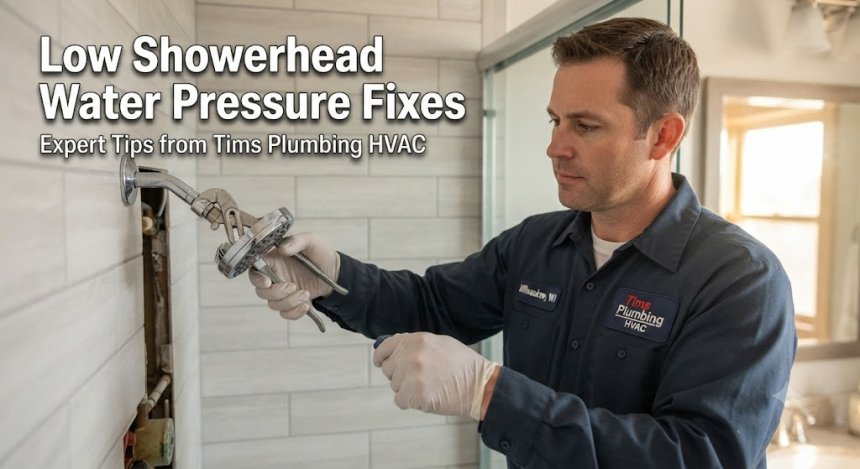
Low Showerhead Water Pressure Fixes
Fix low water pressure from a showerhead with expert tips from Tims Plumbing HVAC in Milwaukee, WI. Restore your shower flow today.
Stepping into the shower after a long day should feel refreshing, but standing under a weak, sputtering trickle is an instant mood killer. Dealing with low water pressure from a showerhead is a frustrating daily inconvenience that turns a relaxing morning routine into an irritating chore. Homeowners across Milwaukee, Wisconsin frequently encounter this issue, particularly as seasonal temperature shifts and hard water take a toll on household plumbing systems. When water flow drops significantly, it is rarely just an annoying quirk; it often signals mineral calcification, a partially closed supply valve, or deeper pressure regulation problems within your home's infrastructure. Ignoring this symptom can lead to total fixture failure or mask larger plumbing faults that escalate utility bills and cause hidden internal damage. At Tims Plumbing HVAC, our licensed technicians help residents throughout Milwaukee, Wauwatosa, West Allis, and Brookfield diagnose and resolve flow restrictions before they compound into expensive repairs.
Financial Breakdown: Cost Factors & Investment Realities
Understanding the financial aspects of plumbing repairs helps homeowners budget effectively for home maintenance. Plumbing repair costs vary depending on the severity of the problem, accessibility, materials required, emergency service, property type, and local labor rates.
-
Diagnostic and Service Call Fees: Covering the technician's travel time and systematic troubleshooting to isolate the root cause of the pressure drop.
-
Specialty Equipment Deployment: Utilizing advanced tools like digital pressure gauges or thermal imaging to map hidden line restrictions.
-
Material Quality: Choosing between standard replacement parts, high-grade brass components, or modern PEX piping upgrades.
-
Permitting and Code Compliance: Required fees if major supply line alterations or valve replacements are mandated by local Milwaukee building codes.
-
Repair vs. Total Fixture Replacement: Weighing the cost of cleaning or rebuilding an existing shower valve against installing a brand-new, modern pressure-balanced shower system.
What Is Low Water Pressure From a Showerhead? Decoding the Mechanism
A showerhead pressure issue occurs when the velocity and volume of water exiting the nozzle fall significantly below normal operating standards, usually measured around 2.0 to 2.5 gallons per minute for modern fixtures.
-
The Ideal Mechanism: Water travels under regulated pressure through supply lines, mixing seamlessly in the pressure-balancing valve before shooting through the shower arm and out individual rubber or silicone nozzles.
-
The Breakdown: When mineral deposits choke the nozzle orifices, or when an internal cartridge fails, water gets choked off, resulting in a weak stream or an uneven spray pattern.
-
Real-World Milwaukee Scenario: Imagine getting ready for work in a historic bungalow in Milwaukee's Riverwest neighborhood, only to find that your second-floor bathroom shower produces a dismal, weeping stream because decades-old galvanized pipes are choked with internal rust scaling.
Root Causes: Why This Problem Occurs in Milwaukee Homes
Plumbing systems in the Midwest face unique environmental and structural challenges that accelerate wear and tear.
-
Aging Infrastructure: Many historic Milwaukee homes still feature aging galvanized steel or cast iron pipes that naturally narrow over decades due to internal corrosion and rust buildup.
-
Hard Water Mineral Scaling: Milwaukee draws its water from Lake Michigan, and while safe, it contains high levels of calcium and magnesium that rapidly calcify showerhead nozzles and internal mixing valves.
-
Municipal Pressure Fluctuations: Varying municipal water supply pressures across different city neighborhoods can strain residential lines, necessitating properly calibrated Pressure Reducing Valves (PRVs).
-
Seasonal Freeze-Thaw Cycles: Ground shifting caused by harsh winters can stress underground supply lines or basement pipes, occasionally causing partial kinks or hidden restrictions.
-
Material Degradation: Rubber O-rings, washers, and internal plastic diverter gates wear out over time, restricting the smooth path of water to the showerhead.
Unique Expert Insights: Hard Truths Homeowners Learn Too Late
-
Temporary patch kits mask deeper system failures and void home insurance clauses. Slapping a quick fix on a chronic pressure or leak issue often ignores structural decay, leaving you unprotected if a major pipe failure occurs.
-
Chemical drain cleaners corrode pipe walls from the inside out. Pouring harsh chemical solutions down bathroom drains to clear sluggish flow generates intense heat that melts PVC and eats away at metal joints.
-
Unlicensed handymen often create hidden code violations that fail during real estate home inspections. Hiring unqualified help for plumbing modifications frequently leads to cross-connections or improper venting that surfaces painfully when you try to sell your home.
-
Preventive maintenance plans cost a fraction of a single emergency midnight extraction. Scheduling routine evaluations prevents catastrophic pipe blowouts that require expensive structural drying and remediation.
-
Ignoring a slow pressure drop accelerates total fixture burnout. When valves struggle against mineral scale, the extra friction burns out internal components much faster than normal wear.
Critical Warning Signs: When Your Home is Sounding the Alarm
Low shower pressure rarely happens in a complete vacuum; it is often accompanied by other subtle structural alerts.
-
Unexplained Water Meter Spikes: If your water meter spins continuously when all fixtures are closed, a hidden supply leak could be siphoning off your water volume.
-
Auditory Clues: Hearing a loud banging sound (water hammer) when shutting off bathroom faucets, or listening to a persistent whistling noise inside the walls, points to trapped air or restricted flow paths.
-
Olfactory Indicators: Musty, damp earth or mildew odors around bathroom walls suggest that a slow, hidden behind-the-wall leak has been saturating framing materials.
-
Cascading Structural Risks: Delaying intervention allows uncontained moisture to rot wooden studs, delaminate subfloors, and trigger aggressive black mold growth that threatens indoor air quality.
Professional Diagnostic & Repair Workflow
When a complex pressure issue goes beyond a simple fixture cleaning, licensed professionals execute a disciplined step-by-step triage protocol.
-
Step 1: Non-Invasive Triage & Safety Isolation: We test multiple fixtures throughout the home to determine if the pressure loss is isolated to the shower or affects the entire property, shutting off localized supply lines safely.
-
Step 2: Precision Diagnostic & Digital Video Inspection: We attach precision manometers to measure exact PSI levels and use micro-cameras to inspect the interior of supply pipes for scale and blockages.
-
Step 3: Transparent, Upfront Options & Written Estimating: We walk you through our findings, explaining repair versus replacement choices clearly before any wrench touches your plumbing.
-
Step 4: Code-Compliant Remediation & Part Replacement: We swap out failed mixing cartridges, clear valve bodies, or replace compromised pipe segments in strict accordance with local plumbing codes.
-
Step 5: Pressure Testing, Flow Verification, & Cleanup: We run extensive pressure tests to guarantee optimal flow rates, sanitize the work zone, and leave your bathroom spotless.
Advanced Diagnostics: The Professional Tool Arsenal
Professional plumbing relies on high-tech engineering gear rather than guesswork to pinpoint flow bottlenecks.
-
Electronic Acoustic and Thermal Leak Detectors: Pinpoint hidden pipe restrictions and behind-the-wall water loss without tearing open drywall unnecessarily.
-
Push-Rod High-Definition Drain and Sewer Cameras: Navigate internal pipe networks to visualize scale buildup, root intrusions, or structural collapses.
-
Hydro-Jetting High-Pressure Cleaning Units: Deliver controlled streams of high-pressure water to scour decades of calcified mineral scale and grease out of pipe interiors.
-
Digital Manometers and Pressure Testing Kits: Accurately measure pounds per square inch (PSI) at various home junctions to evaluate municipal supply strength and PRV performance.
DIY Reality Check: What You Can Safely Fix vs. When to Step Back
-
Safe Homeowner Actions: Unscrewing the showerhead and soaking it in a vinegar solution overnight to dissolve calcium deposits, or checking if the shower arm diverter valve is fully open.
-
The Danger Zone: Forcing stuck galvanized pipe fittings, dealing with gas-assisted water heaters, or attempting to torch-solder copper lines without proper fire safety gear.
-
When to Call a Professional: If cleaning the showerhead yields no improvement, or if you suspect your home's main pressure-reducing valve or interior supply lines are failing.
Comprehensive Home Plumbing Maintenance Framework
Proactive upkeep keeps your water flowing smoothly across every season of the year.
-
Spring/Summer Checks: Inspect outdoor spigots for winter frost damage, test your sump pump operation, and ensure ground grading slopes away from your foundation.
-
Fall/Winter Preparation: Disconnect and drain garden hoses, insulate exposed basement pipes near exterior walls, and flush sediment out of your water heater tank.
-
Year-Round Habits: Clean showerhead nozzles monthly with a soft brush, monitor your monthly water bill for unusual creeps, and avoid chemical clog removers.
Emergency Protocol: When Immediate Dispatch is Non-Negotiable
Certain plumbing scenarios demand an immediate emergency call to prevent extensive property destruction.
-
Catastrophic Pipe Bursts: When an interior supply line splits open, flooding drywall and ceilings within minutes.
-
Total Loss of Potable Water Supply: Sudden, unexplained failure of water delivery to all home fixtures.
-
Overflowing Fixtures: Backed-up water threatening electrical outlets, baseboard heaters, or finished living spaces.
-
Severe Main Line Leaks: Major geysers or pooling water around your foundation or main water shut-off valve.
Frequently Asked Questions (FAQs)
-
Why is my shower pressure low only on hot water? This typically occurs when mineral scale accumulates inside the hot water supply line or when the water heater dip tube becomes fractured, restricting hot water delivery.
-
How much does leak detection cost? Diagnostic costs depend on the property's size and whether specialized acoustic or thermal imaging equipment is required to locate the issue.
-
Can a clogged drain damage pipes? Yes, repeated chemical cleaner use and untreated pressure build-ups can weaken pipe joints and cause structural cracking over time.
-
Is hydro jetting safe for old pipes? An experienced plumber must inspect pipe wall thickness first, as excessive pressure can damage fragile historic or corroded lines.
-
How do I know if my main water pressure is too high? Warning signs include banging pipes, leaking toilet valves, and premature failure of appliances like washing machines and water heaters.
-
How long do water heaters last? Traditional tank water heaters typically operate efficiently for 8 to 12 years before requiring replacement.
-
Why does my showerhead whistle when turned on? Whistling usually indicates a partially restricted valve, a failing pressure-balancing unit, or loose washers vibrating in the stream.
-
What causes sudden water pressure drops? Sudden drops often stem from municipal water main repairs, a failing pressure-reducing valve, or a major hidden leak on your property.
-
Can plumbing leaks increase my water bill? Even a slow, hidden leak can waste hundreds of gallons daily, driving up utility expenses significantly.
-
When should I replace plumbing instead of repairing it? Frequent recurring leaks, extensive rust corrosion, and outdated pipe materials like galvanized steel indicate that a full repiping is more cost-effective.
Why Milwaukee Homeowners Trust Tims Plumbing HVAC
-
Experienced Licensed Plumbers: Rigorously trained professionals equipped to handle complex residential and commercial plumbing infrastructure.
-
Honest Recommendations: Straightforward, transparent advice tailored to your home's actual needs without high-pressure sales tactics.
-
Upfront Estimates: Clear pricing provided before any work begins, ensuring you never face surprise charges.
-
State-of-the-Art Equipment: Utilizing advanced diagnostic cameras and pressure gauges for precise, non-destructive troubleshooting.
-
Deep Local Expertise: Specialized knowledge of Milwaukee, Wauwatosa, West Allis, and Brookfield housing styles and municipal water conditions.
-
Customer-First Commitment: Dedicated to exceptional workmanship, cleanliness, and long-term reliability on every service call.