How to Fix a Slow-Filling Toilet | Expert Guide
Learn why your toilet fills too slowly and how to fix it. Get expert plumbing tips from Tims Plumbing HVAC in Milwaukee, WI.
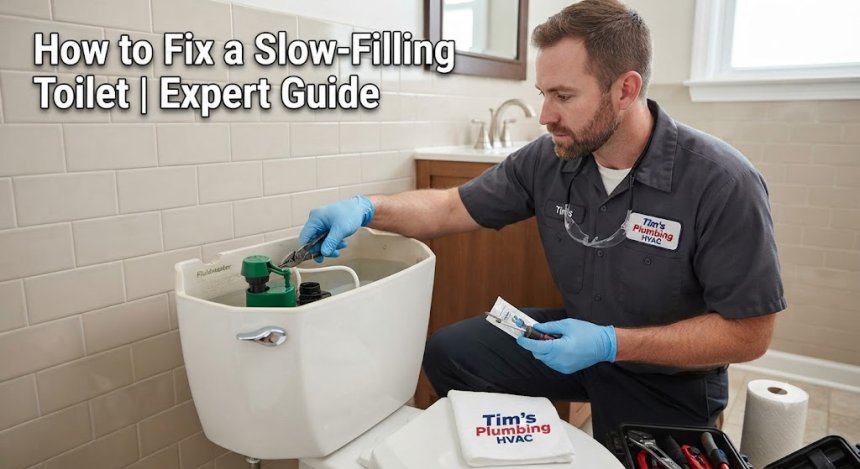
There is few things more frustrating than standing in the bathroom waiting an eternity for a toilet tank to refill so you can flush a second time. When dealing with a slow filling toilet, the daily annoyance is just the tip of the iceberg; it often signals underlying mechanical wear, mineral scaling, or water pressure issues that drive up utility bills over time. Homeowners across Milwaukee, Wisconsin frequently encounter this issue due to the region's notoriously hard water and aging municipal infrastructure. Addressing this problem promptly prevents strain on your plumbing system, conserves water, and spares you from unexpected emergency repair bills during harsh Midwest winters.
What Is a Slow-Filling Toilet? Decoding the Mechanism
A toilet relies on a simple gravity-fed mechanical system inside the tank to manage water levels. When you press the flush handle, the flapper opens, releasing water into the bowl. As the water level drops, a float falls, triggering the fill valve to open and let fresh water rush back in through the supply line and refill tube.
When a toilet fills too slowly, the breakdown usually happens at the fill valve assembly, a clogged supply line, or a partially closed shut-off valve. Instead of a rapid, forceful surge of water, a sluggish trickle enters the tank, leaving the system struggling to cycle properly. In older Milwaukee homes built during the mid-20th century, legacy galvanized supply lines or corroded brass ballcock assemblies often lose their inner clearance due to decades of mineral buildup, choking water flow long before it reaches the tank.
Root Causes: Why This Problem Occurs in Milwaukee Homes
-
Hard Water Mineral Scaling & Calcification: Milwaukee municipal water possesses a high mineral content (calcium and magnesium), which rapidly precipitates inside the fine ports of modern plastic fill valves and older brass assemblies, restricting water passage.
-
Aging Infrastructure & Pipe Corrosion: Homes in historical neighborhoods like Bay View or Riverwest often feature aging interior galvanized steel or cast iron piping that accumulates internal rust tuberculation, choking overall flow rates.
-
Municipal Water Pressure Fluctuations: Seasonal stress on Milwaukee's aging municipal water mains can cause localized pressure drops, impacting how aggressively water pushes through residential shut-off valves.
-
Sediment-Clogged Supply Lines: Debris, solder flakes from past repairs, or pipe scale can dislodge and become trapped inside flexible braided supply lines or angle stop valves.
-
Material Degradation Over Time: Rubber seals, internal diaphragms, and plastic float arms wear out, warp, or calcify, failing to open the fill valve fully during a cycle.
Critical Warning Signs: When Your Home is Sounding the Alarm
-
Auditory Clues: Persistent hissing, whistling, or an agonizingly slow, high-pitched whine as water trickles into the tank long after a flush completes.
-
Unexplained Utility Spikes: A hidden trickle or valve bypass can cause continuous, silent running, driving up your municipal water and sewer utility bills.
-
Secondary Fixture Starvation: If multiple fixtures in the home experience pressure drops simultaneously when a toilet or washing machine runs, it points to a broader supply restriction.
Ignoring these early warning signs can lead to premature component failure, constant cycling that burns out flappers, and potential water damage if a compromised fill valve eventually sticks in the open position.
Professional Diagnostic & Repair Workflow
A licensed, insured plumber utilizes a systematic approach to resolve fill issues permanently rather than applying a temporary band-aid:
-
Step 1: Non-Invasive Triage & Safety Isolation: Inspecting the area, turning off the dedicated supply stop valve, and assessing the physical condition of the flexible connector.
-
Step 2: Precision Diagnostic & Digital Pressure Check: Measuring dynamic water pressure at the fixture using a threaded gauge to determine if the restriction is localized or systemic.
-
Step 3: Transparent, Upfront Options & Written Estimating: Presenting clear choices, such as rebuilding the existing valve assembly versus upgrading to a modern, high-performance fluidmaster valve and braided steel line.
-
Step 4: Code-Compliant Remediation & Part Replacement: Disassembling the old unit, flushing out the supply line to clear localized debris, and installing code-approved components.
-
Step 5: Pressure Testing, Flow Verification, & Clean: Testing the refill cycle multiple times, verifying the proper water line mark inside the tank, and sanitizing the work area.
Advanced Diagnostics: The Professional Tool Arsenal
-
Digital Manometers: Used to measure exact static and dynamic water pressure to rule out pressure-reducing valve (PRV) failures.
-
Inline Flush Tools: Specialized adapters that allow plumbers to backflush supply lines safely without flooding the bathroom floor.
-
Thermal Imaging Cameras: Helpful in identifying hidden micro-leaks behind bathroom walls or subfloors caused by failing supply connectors.
-
Pipe Wall Thickness Gauges: Ultrasonic tools used to assess the structural integrity of aging metal supply pipes in historic properties.
DIY Reality Check: What You Can Safely Fix vs. When to Step Back
-
Safe homeowner actions: Adjusting the float height clip, cleaning sediment out of the fill valve cap assembly (following manufacturer instructions), and ensuring the flexible refill tube is properly clipped above the overflow pipe.
-
The danger zone: Attempting to force rusted, decades-old galvanized shut-off valves can snap the nipple inside the wall, triggering an uncontrollable indoor flood.
-
When to call a pro: If replacing the fill valve does not resolve the slow fill, if the angle stop valve leaks when turned, or if your home has deteriorating iron piping that requires soldering or PEX repiping.
Financial Breakdown: Cost Factors & Investment Realities
Professional plumbing repairs rely on transparent, flat-rate pricing models based on labor and material quality rather than unpredictable hourly billing. Key variables influencing the investment include:
-
Service Dispatch & Diagnostics: Covering travel time and comprehensive testing of the home's water system.
-
Component Quality: Upgrading from builder-grade plastic valves to heavy-duty, commercial-grade brass-shank fill valves and burst-proof braided stainless steel supply lines.
-
Accessibility Challenges: Tight spaces in vintage half-baths or confined cabinetry can add labor complexity.
-
Associated Repairs: Replacing a frozen or crumbling angle stop valve alongside the fill valve.
Unique Expert Insights: Hard Truths Homeowners Learn Too Late
-
Temporary universal patch kits and hardware store seal-savers rarely hold up against aggressive hard water and often mask failing mechanisms until they leak.
-
Chemical drop-in tank tablets degrade internal rubber flappers and valve seals within months, voiding manufacturer warranties.
-
Unlicensed handymen often reuse old, fatigued supply lines during toilet replacements, dramatically increasing the risk of catastrophic line rupture while you are away from home.
-
Investing in annual professional plumbing evaluations costs a fraction of an emergency midnight mitigation service.
Comprehensive Home Plumbing Maintenance Framework
-
Spring/Summer Checks: Test main water shut-off valves to ensure they turn smoothly; inspect exposed basement supply lines for condensation or early corrosion.
-
Fall/Winter Preparation: Disconnect and drain outdoor garden hoses; insulate vulnerable supply pipes running through exterior crawlspaces or unheated utility rooms.
-
Year-Around Habits: Avoid dropping chemical bleach pucks into toilet tanks; periodically wipe down internal valve components if mineral buildup is visible.
Emergency Protocol: When Immediate Dispatch is Non-Negotiable
While a slow-filling toilet is usually a standard maintenance nuisance, certain situations require an immediate 24/7 emergency plumber dispatch:
-
The water shut-off valve shears off or fails completely, causing uncontrolled spraying.
-
The toilet overflows continuously while backing up raw sewage into the living space.
-
Structural flooding begins to impact electrical outlets or subfloor framing.
Frequently Asked Questions (FAQs)
Why is my toilet filling up so slowly after I flushed it?
The most common culprit is a clogged fill valve filter cap, mineral buildup restricting the valve ports, or a partially closed water supply valve behind the toilet.
Can hard water cause a toilet to fill slowly?
Yes. Milwaukee's hard water leaves calcium and lime deposits inside the tiny orifices of the fill valve, choking the water stream over time.
Should I clean or replace a slow fill valve?
If the valve is more than five to seven years old, replacing it with a modern, high-efficiency fill valve is usually more cost-effective and reliable than cleaning.
Can a bad supply line restrict water flow to my toilet?
Absolutely. Older braided lines or rigid metal pipes can collapse internally or accumulate sediment blockage, starving the toilet of adequate volume.
Why does my toilet make a loud whistling noise while filling?
A high-pitched whistle usually indicates that the fill valve seal is worn out or partially blocked by mineral scale, forcing water through a microscopic opening.
How do I adjust the water level in my toilet tank?
Most modern fill valves feature an adjustment screw or a spring-clip mechanism attached to the float cup that lets you raise or lower the water stop point.
Is a slow-filling toilet considered a plumbing emergency?
No, it is a routine maintenance issue. However, if it is accompanied by a leaking shut-off valve or a stuck valve causing a continuous overflow, treat it urgently.