How to Unclog a Shower Drain Safely | Tims Plumbing HVAC
Learn how to unclog a shower drain in Milwaukee without damaging pipes. Get safe DIY tips, expert advice, and know when to call a licensed plumber.
Standing ankle-deep in soapy water while trying to rinse off is a frustrating daily inconvenience that many homeowners across Milwaukee, WI experience. How to unclog a shower drain safely without resorting to harsh chemical products that degrade PVC and cast iron pipes is one of the most common service inquiries received by local plumbing professionals.
This problem typically happens due to the gradual accumulation of human hair, soap scum, body oils, and mineral buildup from hard water. Overlooked slow drains quickly transform into complete blockages, causing water to pool and potentially seep into subfloors or drywall. Residents throughout the Milwaukee area—from historic homes in Riverwest and Bay View to newer constructions in Wauwatosa and Brookfield—frequently deal with these blockages due to regional hard water mineral content. Taking prompt action prevents minor restrictions from turning into costly sewer backups or fractured pipe joints.
Understanding Shower Drain Blockages
A shower drain clog is a localized restriction or complete blockage within the trap or waste and vent piping system that prevents wastewater from flowing freely down to the main sewer line.
Common situations involve daily family use where long hair slips past standard strainers, binding with sticky soap residue to form a dense, fibrous plug. Typical symptoms include water swirling sluggishly, a gurgling sound coming from the drain as air escapes around the blockage, or unpleasant mildew odors wafting up from the pipes. For example, a multi-person household using a single bathroom will see a noticeable slowdown in drainage within just a few months if hair traps are not regularly cleaned out.
Root Causes of Shower Drain Rests
Drain restrictions rarely happen overnight. Several underlying factors contribute to how quickly and severely a shower drain stops functioning.
-
Hair Accumulation: Strands of hair naturally shed during washing wrap around cross-bars and inner pipe threads, snagging other debris.
-
Soap Scum Buildup: Traditional bar soaps contain fats and tallow that react with mineral-rich water, creating a sticky wax-like film on pipe walls.
-
Hard Water Minerals: Milwaukee's regional water supply contains high levels of calcium and magnesium, which precipitate inside pipes and catch debris.
-
Improper Pipe Venting: Inadequate or blocked vent pipes slow down gravity flow, making it easier for minor debris to settle and create a choke point.
-
Damaged or Sagging Pipes: Older cast iron or galvanized steel lines develop rough interior scaling, while settling PVC lines can sag, creating low spots where sludge collects.
Critical Warning Signs of a Failing Drain System
Ignoring minor drainage changes allows hidden plumbing issues to escalate. Several warning signs indicate that a shower drain requires immediate attention.
-
Slow Drainage: Water takes longer than normal to recede, leaving a pool around your feet during a standard 10-minute shower.
-
Gurgling Sounds: Bubbles or gulping noises indicate trapped air trying to escape past a stubborn obstruction.
-
Persistent Foul Odors: Rotting hair, bacteria, and trapped organic waste produce a sulfur or mildew smell near the shower stall.
-
Fruit Flies or Drain Flies: Tiny insects breed rapidly inside the organic slime lining a sluggish or partially blocked waste pipe.
-
Puddles Outside the Stall: Water backing up past failing tile grouting or leaking through worn sub-floor connections.
Related Plumbing System Vulnerabilities
A compromised shower drain often points to broader stress within your home's entire drainage network. Ignoring localized clogs can trigger interconnected failures.
-
Branch Line Blockages: Hair and soap that slip past the shower trap can lodge further down the main bathroom wet vent, affecting sinks and tubs.
-
Sewer Line Scale: Heavy mineral and organic buildup can restrict the main building drain, causing multiple fixtures to back up simultaneously.
-
P-Trap Leaks: Excessive pressure or corrosive chemical drain cleaners can deteriorate older brass or plastic P-traps beneath the floorboards.
Safe DIY vs. Professional Intervention
Homeowners can safely handle minor hair clogs using mechanical methods before calling for professional help.
-
The Plastic Zip Tool: Inexpensive barbed plastic strips can be fed down the drain opening to hook and pull out hair masses without touching the pipe walls.
-
Manual Trap Cleaning: If you have easy access to the P-trap via a basement or crawlspace beneath a Milwaukee home, placing a bucket underneath and unscrewing the cleanout plug allows you to manually clear debris.
-
Boiling Water and Dish Soap: For mild soap scum, a mixture of hot water and liquid dish detergent can help break down grease layers.
Avoid using chemical liquid drain openers. These harsh acidic or alkaline compounds generate intense heat that can warp PVC pipes, degrade rubber gaskets, and severely burn skin. When a plunger fails, or when multiple fixtures back up at once, it is time to call a licensed plumber.
Professional Diagnostic and Repair Equipment
Licensed technicians utilize advanced diagnostic tools to resolve stubborn blockages safely and accurately without guesswork.
-
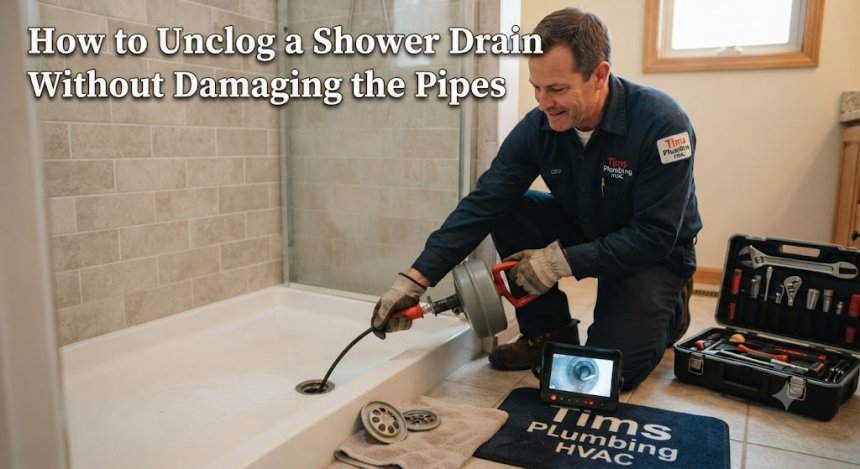
Miniature Drain Inspection Cameras: High-resolution fiber-optic cameras are threaded directly into the shower drain line to visually inspect the exact nature and location of the obstruction.
-
Motorized Drain Augers (Snakes): Heavy-duty cable machines with specialized cutting heads break through dense hair mats, roots, and scale without cracking pipe interiors.
-
Hydro Jetting Systems: High-pressure water streams scour the interior walls of drain pipes clean of all grease, soap scum, and mineral scale, restoring pipes to a like-new condition.
Step-by-Step Professional Repair Protocol
When you book a service call with Tims Plumbing HVAC, our licensed technicians follow a structured procedure to ensure lasting results.
-
Comprehensive Inspection: The technician listens to your description of the problem and runs a camera down the line if recurring clogs are suspected.
-
Accurate Diagnosis: Identifying whether the issue is a localized hair clog or a deeper venting/sewer line restriction.
-
Upfront Estimate: Presenting clear, honest pricing options before any mechanical work begins.
-
Targeted Clearing: Utilizing professional-grade augers or hydro jetting to completely remove the obstruction.
-
Flow Testing: Running multiple gallons of water through the system to confirm proper drainage velocity and check for leaks.
-
Workspace Cleanup: Sanitizing the work area and leaving your bathroom cleaner than it was found.
-
Preventive Consultation: Offering personalized advice on how to keep your specific plumbing setup flowing smoothly.
Repair Timelines and Factors
The duration of a shower drain service depends entirely on the complexity of the blockage.
-
Simple Hair Clog Removal: Typically completed within 30 to 45 minutes.
-
Stubborn Main Branch Clearing: Takes between 1 to 2 hours if specialized cabling is required.
-
Hydro Jetting or Pipe Repair: Can range from 2 to 4 hours depending on pipe accessibility and scale buildup.
Factors affecting the timeline include pipe material (older cast iron requires more delicate handling), accessibility of cleanouts, and whether structural modifications are needed.
Cost Factors in Drain Cleaning
Plumbing service costs vary depending on the severity of the problem, accessibility, materials required, emergency service, property type, and local labor rates.
-
Diagnostic Fees: Covers the travel time and expert assessment required to identify the root cause.
-
Severity and Location: Clearing a trap is faster and less expensive than clearing a main sewer stack.
-
Equipment Deployed: Standard snaking versus advanced camera inspections and hydro jetting.
-
Timing: Standard business hours versus emergency after-hours dispatch.
Critical Realities Every Homeowner Should Know
-
Chemical Cleaners Damage Pipes: Pouring store-bought acid down your shower drain often eats away at metal pipe threads and softens PVC joints.
-
Small Clogs Grow: A slight drainage slowdown left unaddressed will catch more soap and hair until it forms an impenetrable plug.
-
Hard Water Acceleration: Milwaukee's hard water accelerates mineral scaling, meaning unmaintained pipes narrow much faster than those in soft-water regions.
-
DIY Over-Tightening: Forcing PVC slip nuts too tight with wrenches cracks plastic washers, turning a simple clog into an active water leak beneath the floor.
15 Common Mistakes Homeowners Make
-
Pouring chemical drain openers down slow drains, risking pipe corrosion and skin burns.
-
Using wire coat hangers that scratch, puncture, or get stuck inside drain pipes.
-
Ignoring slow-draining water until it becomes a complete basement backup.
-
Skipping routine mesh drain strainers that catch hair before it enters the trap.
-
Forcing plungers too aggressively on old, brittle porcelain or plastic fixtures.
-
Pouring cooking grease or thick oils down bathroom or utility drains.
-
Hiring unlicensed handymen who lack the specialized tools to inspect drain lines properly.
-
Failing to check rubber gaskets and O-rings during fixture maintenance.
-
Over-tightening P-trap slip nuts, causing permanent thread stripping.
-
Assuming all drain clogs can be fixed with boiling water alone.
-
Neglecting annual plumbing inspections in older Milwaukee homes.
-
Flushing baby wipes or personal hygiene products down toilets connected to the same branch lines.
-
Failing to run cold water while operating garbage disposals or clearing adjacent drains.
-
Delaying repairs on minor slow drains until property damage occurs.
-
Failing to clear mineral buildup from shower heads and drain grates regularly.
Practical Maintenance Tips for Smooth Drainage
-
Install a silicone or stainless steel hair catcher over every shower drain opening.
-
Remove and clean the hair catcher weekly to prevent buildup.
-
Pour a kettle of boiling water down the drain monthly to dissolve mild soap residue.
-
Flush drains with a half-cup of baking soda followed by white vinegar every few months to neutralize organic odors.
-
Consider installing a whole-home water softening system to combat Milwaukee's hard water mineral accumulation.
-
Avoid washing heavy mud, pet hair, or construction debris down standard bathroom drains.
-
Inspect tile grouting and caulking around the shower base annually to prevent hidden wall leaks.
-
Schedule professional drain cleaning every 1 to 2 years for proactive maintenance.
When to Call an Emergency Plumber
Some plumbing situations cannot wait until regular business hours. Contact an emergency plumber immediately if you experience:
-
Complete wastewater backup flooding multiple home fixtures simultaneously.
-
Raw sewage overflowing from floor drains or shower pans.
-
Burst supply lines or active major water leaks threatening structural integrity.
-
Total loss of water pressure accompanied by strange plumbing noises.
Frequently Asked Questions
-
Can a clogged shower drain damage my pipes? Yes, severe pressure from trapped water and harsh chemical cleaners can weaken joints and crack older pipes.
-
Is hydro jetting safe for old pipes? A licensed professional evaluates pipe material and condition first; hydro jetting is safe for sound lines but may not be recommended for severely deteriorated, collapsed pipes.
-
Why does my shower drain smell like sulfur or rotten eggs? This odor is usually caused by decomposing hair, bacteria, and soap scum trapped in the P-trap, or a dried-out trap allowing sewer gas to vent upward.
-
How often should I clean my shower drain? Removing hair from the strainer should be done weekly, while a deeper mechanical or enzymatic cleaning is recommended every 6 to 12 months.
-
Can I use a wire coat hanger to unclog my shower? It is risky because sharp metal ends can puncture plastic pipes or get permanently wedged in pipe bends.
-
Why is water backing up into my shower when the toilet flushes? This is a serious sign of a main sewer line blockage or a vent stack obstruction requiring immediate professional intervention.
-
How much does professional drain cleaning cost? Costs vary based on the depth and stubbornness of the clog, but preventive clearing is far more affordable than emergency pipe replacement.
-
What is the best natural way to maintain a clear drain? Flushing with hot water, baking soda, and vinegar helps break down organic films without damaging pipe walls.
-
Do hair catchers really work? Yes, high-quality mesh or silicone strainers capture up to ninety percent of stray hair before it enters the drainpipe.
-
When should I replace my drain pipes instead of clearing them? If pipes are heavily corroded, cracked, or sagging due to shifting soil, a full replacement is the safest long-term solution.