Why Sewer Camera Inspections Matter Before Buying an Older Home
Discover why a sewer camera inspection is essential before buying an older home in Oak Creek, WI. Learn how hidden lateral line damage can cost thousands.


Understanding the Unseen Lateral Line
When purchasing an older residential property, most home buyers carefully evaluate the visible components: the roof condition, the age of the furnace, the functionality of the kitchen appliances, and the state of the electrical panel. However, one of the most expensive and disruptive mechanical components of any home remains entirely hidden beneath the basement floor and the front yard: the main sewer lateral.
Standard home inspections generally check interior plumbing fixtures by running water and ensuring sinks and tubs drain normally. While this confirms that water flows away from the fixtures at the moment of testing, it provides zero insight into the structural integrity of the underground pipe leading to the municipal main or private septic system. A standard inspection cannot reveal whether a pipe is structurally compromised, heavily offset, or inches away from a catastrophic collapse.
The Unique Vulnerabilities of Aging Sewer Systems
Properties built decades ago often feature plumbing materials that have exceeded their expected service life, or materials that react poorly to shifting soil conditions and aggressive tree root growth. In southeastern Wisconsin, properties experience significant seasonal soil shifts due to deep winter frost cycles followed by heavy spring thaws. This continuous expansion and contraction puts immense physical stress on underground drainage networks.
Older homes frequently utilize materials such as cast iron, Orangeburg pipe, clay tile, or early-generation PVC. Cast iron pipes inside and immediately outside older foundations are prone to internal scaling, corrosion, and bottom-side pitting caused by decades of chemical exposure and acidic waste water. Clay tile pipes feature numerous mortar joints that can crack, separate, or shift over time, creating welcoming entry points for tree roots seeking moisture. Once roots penetrate a minor joint crack, they multiply rapidly inside the pipe, trapping solid waste and eventually forming a dense obstruction.
What a Sewer Camera Inspection Actually Reveals
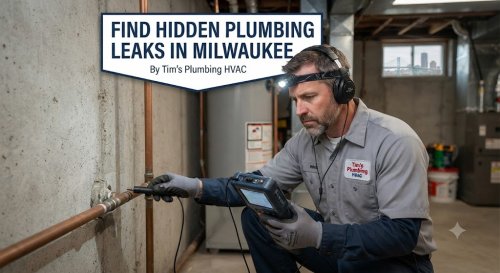
A sewer camera inspection involves pushing a specialized, high-resolution fiber-optic camera attached to a flexible rod through the cleanout or main access point of the plumbing system. A trained technician monitors the live video feed to examine the interior walls, joints, and overall slope of the pipe.
This diagnostic process uncovers structural and operational issues that would otherwise remain completely invisible until a backup occurs. Key findings often include:
- Root Infiltration: Fine root hairs entering through cracked joints or separated pipe sections.
- Structural Cracks and Fractures: Longitudinal cracks or structural breaks caused by ground settling or heavy surface loads.
- Pipe Bellies and Sags: Low spots in the underground line where wastewater pools instead of flowing downhill, leading to recurring solid accumulation.
- Offset Joints: Disconnected pipe sections where the soil has shifted, catching toilet paper and debris.
- Scale and Corrosion Buildup: Severe interior narrowing inside older cast iron lines that restricts flow capacity.
- Debris and Foreign Objects: Construction material, broken tile shards, or collapsed foreign matter lodged within the line.
Distinguishing Minor Blockages from Systemic Failures
A common misconception among homebuyers is that a cleanout or a simple mechanical snaking during a pre-purchase walkthrough proves the sewer line is healthy. However, running an auger through a clogged line only pokes a temporary hole through the obstruction. It does not fix the underlying structural failure that allowed the blockage to form in the first place.
If a sewer line is clogged due to root intrusion, snaking the line will restore flow temporarily, but the roots will quickly grow back. If the line is sagging due to a compromised gravel bed beneath the pipe, clearing the debris will not prevent waste from pooling in the sag again. A camera inspection cuts through guesswork by showing the exact physical condition of the pipe wall and identifying whether the problem is a localized clog or a failing pipe system requiring major repair.
Financial Implications and Repair Scope Considerations
Replacing or repairing a main sewer lateral is one of the most costly unexpected expenses a new homeowner can face. Unlike interior plumbing repairs, underground sewer work often involves heavy excavation across a landscaped front yard, breaking through concrete basement floors, or disrupting municipal right-of-ways.
When estimating potential repair scopes, several physical factors influence the overall complexity:
- Depth of the Pipe: Deeper lines require shoring, larger excavation equipment, and significantly more labor.
- Surface Obstructions: Driveways, concrete walkways, mature landscaping, porches, or municipal utilities situated directly above the damaged line complicate access and restoration.
- Pipe Material and Repair Method: Traditional open-trench excavation differs vastly in cost and property disruption compared to trenchless pipe lining or pipe bursting technologies.
- Location of the Break: Repairs required underneath the interior basement floor differ in scope from repairs located under an exterior lawn or beneath a street connection.
Identifying these risks before closing allows a homebuyer to negotiate repair credits, price reductions, or seller-funded repairs before transferring title ownership.
Safe Homeowner Checks Versus Professional Scope
While home buyers cannot perform a sewer camera inspection without specialized commercial equipment, there are several observable clues buyers and current homeowners can evaluate:
- Slow Draining Fixtures: If multiple lower-level fixtures, such as a basement floor drain, shower, and toilet, all drain sluggishly at the same time, the issue typically resides in the main drain or lateral rather than an individual fixture trap.
- Gurgling Noises: A toilet that gurgles when a nearby sink or washing machine drains indicates that air is being trapped or displaced within the drainage stack due to venting problems or partial downstream blockages.
- Basement Floor Drain Dampness: Unexplained moisture or minor pooling around a basement floor drain after heavy water use can signal that the main line is struggling to discharge waste quickly enough.
Attempting to force high-pressure equipment or unverified chemical drain cleaners into an older, fragile sewer line without a professional diagnosis can worsen structural damage or create hazardous exposures.
Frequently Asked Questions
- Is a standard home inspection enough to check the sewer line?
No. Standard home inspections only test fixtures for immediate drainage. They do not inspect the underground lateral line running from the house to the main connection point. - How long does a sewer camera inspection take?
Most standard residential sewer camera inspections take between 30 to 60 minutes depending on pipe accessibility, cleanout locations, and the total length of the lateral line. - Can a sewer camera inspection spot tree root damage?
Yes. The high-resolution camera clearly shows root intrusion, joint separations, and the exact distance from the access point where the roots are entering the pipe. - What happens if the camera reveals a broken pipe before buying a home?
The findings provide factual documentation that can be shared with the seller, real estate agents, and legal counsel to negotiate repair concessions, pricing adjustments, or seller-funded remediation prior to purchase. - Are older cast iron pipes always in need of replacement?
Not necessarily. While aging cast iron is prone to internal scaling and rough interior surfaces, a camera inspection determines whether the pipe maintains adequate structural wall thickness or if heavy corrosion has led to structural failure. - What is the difference between trenchless repair and traditional excavation?
Traditional excavation involves digging a trench along the entire length of the damaged pipe to replace it. Trenchless methods, such as pipe lining or bursting, often require only small access pits, minimizing landscape and structural disruption.